Decisions in the prefrontal cortex
How primate PFC turns sensation into action, read out with large-scale electrophysiology and dynamical models of population activity.
What I study →Computational & Cognitive Neuroscience
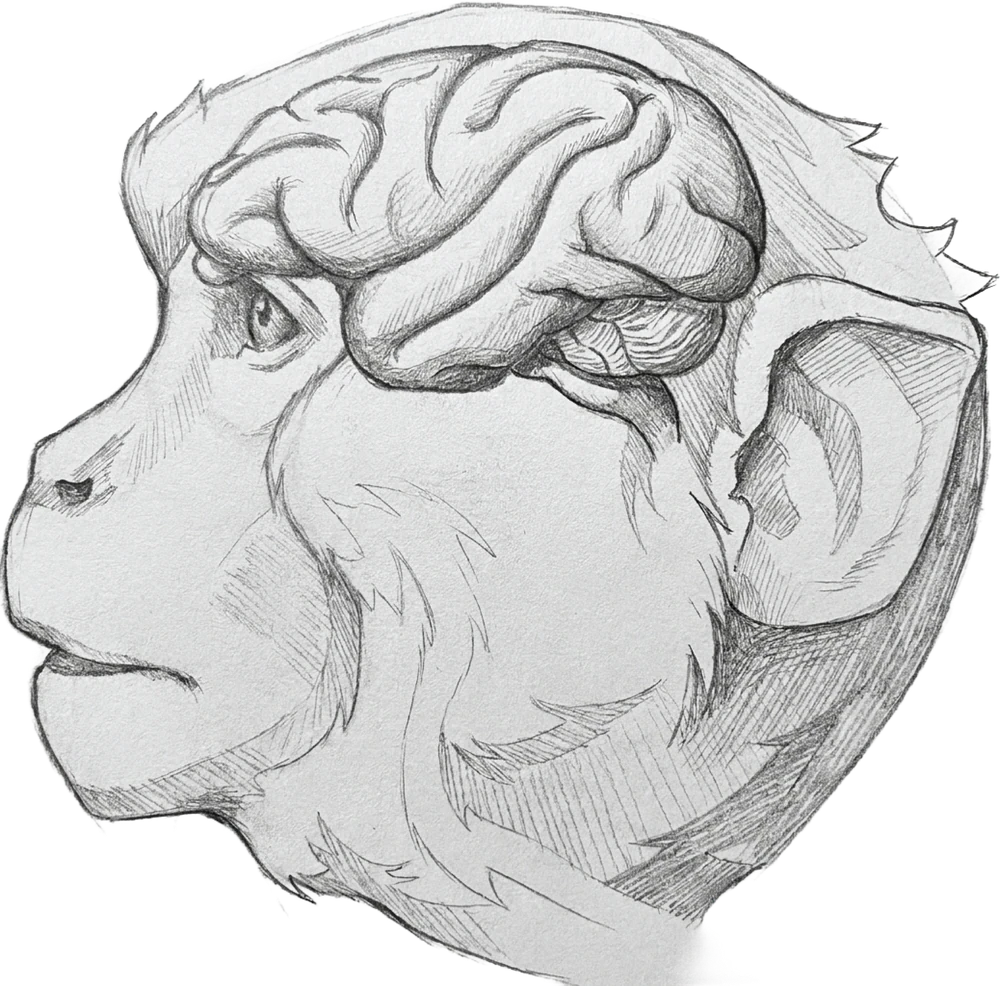
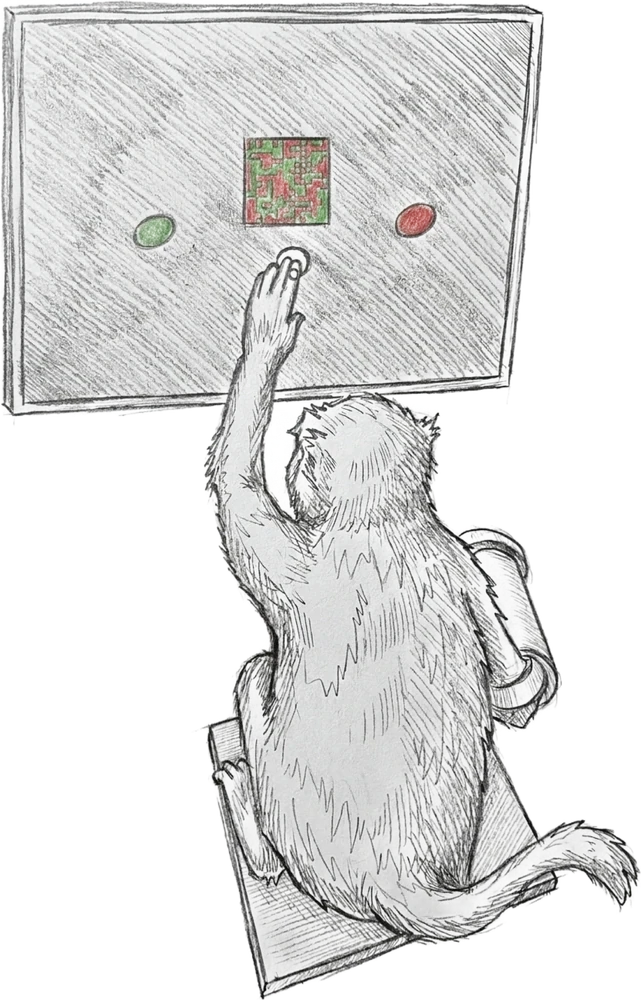
I study how the prefrontal cortex turns sensation into decision — and how to recover the brain's cell types from the electrical signatures single neurons leave behind.
Each point is one of 625 real neurons from my WaveMAP study.

Hello
I'm Kenji — a computational and cognitive neuroscientist who recently defended my Ph.D. in the lab of Chandramouli Chandrasekaran at Boston University, where my work was supported by an NIH NINDS F31 fellowship.
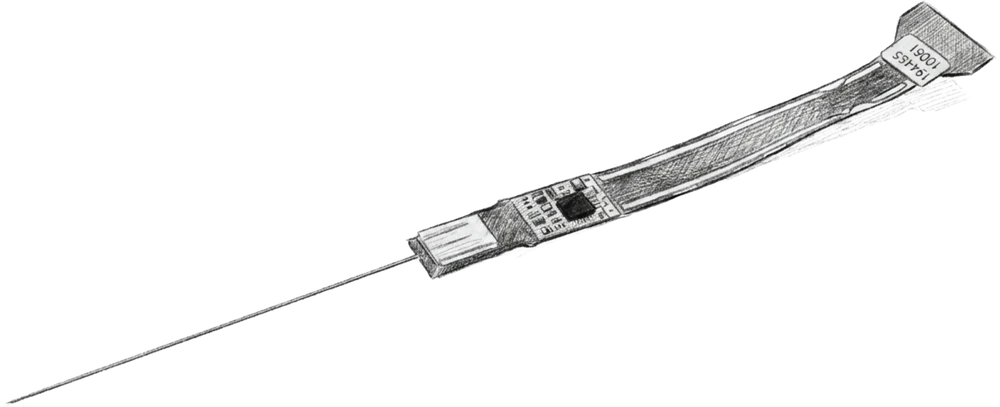
My work asks how the prefrontal cortex of the rhesus macaque supports flexible decision-making, working memory, and action — and, in parallel, how we can read out neural cell types directly from the electrical fingerprints neurons leave in extracellular recordings. To do that I pair large-scale Neuropixels electrophysiology with tools from applied math: nonlinear dimensionality reduction, graph-based and multimodal methods (like WaveMAP), and low-rank recurrent neural networks.
Before BU I was a Research Associate at the Allen Institute for Brain Science, earned an M.S. in Applied Mathematics at the University of Washington, and studied biochemistry and math at the University of Puget Sound. I grew up in Hawaiʻi, I think the process of doing science deserves to be talked about as honestly as the results, and you'll usually find me writing at a café somewhere in Boston.
Recent & Upcoming
Recently defended my Ph.D. in the Chandrasekaran lab; now on the market for postdocs at the intersection of cell types and decision-making.
At COSYNE 2026 in Lisbon: co-organizing the workshop “Bridging cell types and spike trains” (with Josh Siegle) and joining the mentorship panel.
New in Nature Communications: A multimodal approach for visualizing and identifying electrophysiological cell types in vivo (PhysMAP).
New in PNAS (Carr et al.): Neuropixels reveal laminar microcircuit organization in monkey V1 in vivo.
ICLR Spotlight (Yu et al.): In vivo cell-type and brain region classification via multimodal contrastive learning.
A few starting points
How primate PFC turns sensation into action, read out with large-scale electrophysiology and dynamical models of population activity.
What I study →Identifying putative cell types from the shapes of extracellular spikes — from the original eLife paper to a protocol and a multimodal sequel.
How it works →Field notes on the parts that don't make it into papers: applying to grad school, interviews, and what a project actually feels like.
Read along →